
Pest and disease field guide
Brown grass is a symptom—not a diagnosis.
Drought, irrigation failure, scalping, insects, disease, roots, and soil problems can look similar from the driveway. Before treatment, inspect the pattern, the plant, the roots, recent weather, and the turf species.
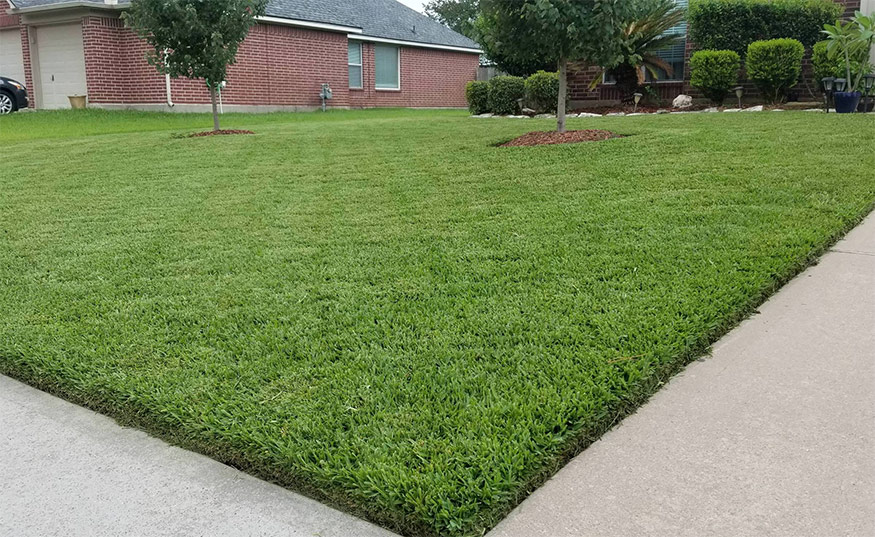
Southern chinch bugs
Southern chinch bugs are the most important insect pest of St. Augustinegrass. Damage often begins in sunny, hot, or drought-stressed areas and expands as irregular yellow-to-brown patches. The insects feed near the base of the grass and can be difficult to see.
Do not diagnose chinch bugs from color alone. A flotation can or careful edge inspection can help confirm their presence. Irrigation problems, root disease, and drought can produce a similar pattern.
Tropical sod webworms
Sod webworm caterpillars chew grass blades and may leave notches, skeletonized blades, green frass, or rapidly thinning patches. Small tan moths may fly up when the lawn is disturbed, but moths alone do not prove damaging caterpillar numbers.
Activity is most common in warm weather. Inspect near the margin of fresh damage and use a UF/IFAS-recommended soap flush when confirmation is needed.
Mole crickets
Mole crickets tunnel near the soil surface and feed on roots and plant tissue. Turf may feel loose, show raised tunnels, pull up easily, or look drought-stressed even after adequate irrigation. Bahia- and bermudagrass are frequent hosts.
UF/IFAS describes a soap-drench sampling method for bringing crickets to the surface. Young nymph activity commonly increases during warm, moist summer conditions.
Large patch—formerly called brown patch
Large patch is a fungal disease most often seen from November through May, particularly in St. Augustinegrass and zoysiagrass. Yellow, orange, or brown patches expand in cool, wet conditions, and affected blades may pull free where the base has rotted.
Reduce prolonged leaf wetness, irrigate only when necessary in the early morning, avoid excessive nitrogen, and mow affected areas last. The old name “brown patch” is still commonly used, but large patch is the current name.
Other look-alike problems
- Gray leaf spot: spots or blighting during warm, humid periods, especially on tender St. Augustinegrass growth.
- Take-all root rot: weak, darkened roots and broad thinning rather than simple blade chewing.
- Nematodes: poor rooting, yellowing, and stress in sandy soil; laboratory diagnosis may be needed.
- Irrigation gaps, pet urine, dull blades, scalping, buried debris, and shade: non-pest causes that should be ruled out.
Scope of Yard Wizard service
Yard Wizard can document symptoms, check mowing and irrigation conditions, and recommend UF/IFAS Extension or a properly licensed pest-control provider when diagnosis or treatment is needed. Yard Wizard does not currently apply insecticides, fungicides, or other pesticides. This page is educational and is not a pesticide recommendation.
Trusted Florida resources
This guide summarizes Florida-specific recommendations. Use the original resources below for additional detail and current local requirements.