
Florida grass guide
Bahiagrass trades a manicured look for toughness and lower inputs.
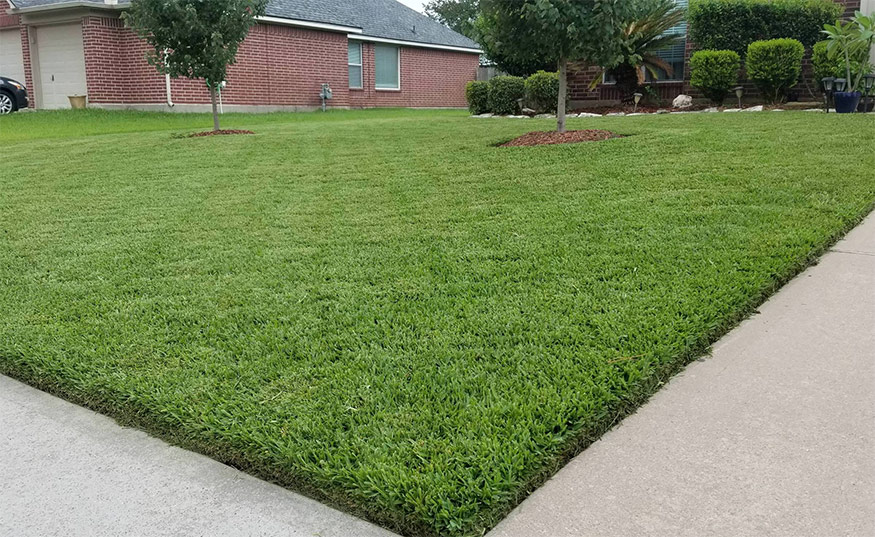
Bahiagrass has a naturally open texture and visible Y-shaped seedheads, but it develops deep roots, tolerates sandy soils, and can survive drought by going dormant. It is practical when resilience matters more than a carpet-like finish.
Where bahiagrass works well
Bahiagrass performs best in full sun and well-drained sandy soil. It generally needs less fertilizer and irrigation than higher-maintenance turf, but its coarse blades, lighter color, and open growth do not create the same dense appearance as St. Augustinegrass or zoysiagrass.
It has limited shade tolerance and does not repair bare areas as quickly as aggressively spreading grasses.
Mowing and seedhead management
UF/IFAS recommends mowing bahiagrass at 3–4 inches. During active growth it may need mowing every 7–14 days, with seedheads sometimes appearing sooner than the leaf canopy seems to require a cut.
Sharp blades matter because tough seed stems can remain ragged after a dull mower passes. Follow the one-third rule rather than allowing the lawn to become very tall and then cutting it short.
Water, fertilizer, and seasonal timing
Established bahiagrass can turn brown and dormant during drought, then recover when rain returns. Irrigation can maintain color, but watering should respond to visible wilt rather than run daily.
Use modest fertilizer inputs only during active growth and obey the Pinellas County June 1–September 30 nitrogen and phosphorus blackout. Spring and early summer are the strongest recovery periods; cooler-weather growth and mowing slow naturally.
Common problems to recognize
- Mole crickets: tunneling loosens soil and damages roots, leaving thinning or drought-like patches.
- Dollar spot and other leaf diseases: more likely when turf is stressed or nutrition is unbalanced.
- Weed invasion: the naturally open canopy can leave space for weeds if mowing or soil conditions weaken the turf further.
- Iron deficiency or high-pH stress: may contribute to yellowing, but symptoms should be diagnosed before products are applied.
What healthy bahiagrass should look like
A healthy Bahia lawn will not look like a golf fairway. The realistic target is an even, rooted stand with manageable seedheads, minimal scalping, and enough density to protect the soil. Correct expectations prevent overwatering and overfertilizing a grass selected for lower-input performance.
Trusted Florida resources
This guide summarizes Florida-specific recommendations. Use the original resources below for additional detail and current local requirements.